
How to Increase Your Credit Score Using a Credit Card (2026)
- 10 November 2026 | 18 Views | By Mint2Save
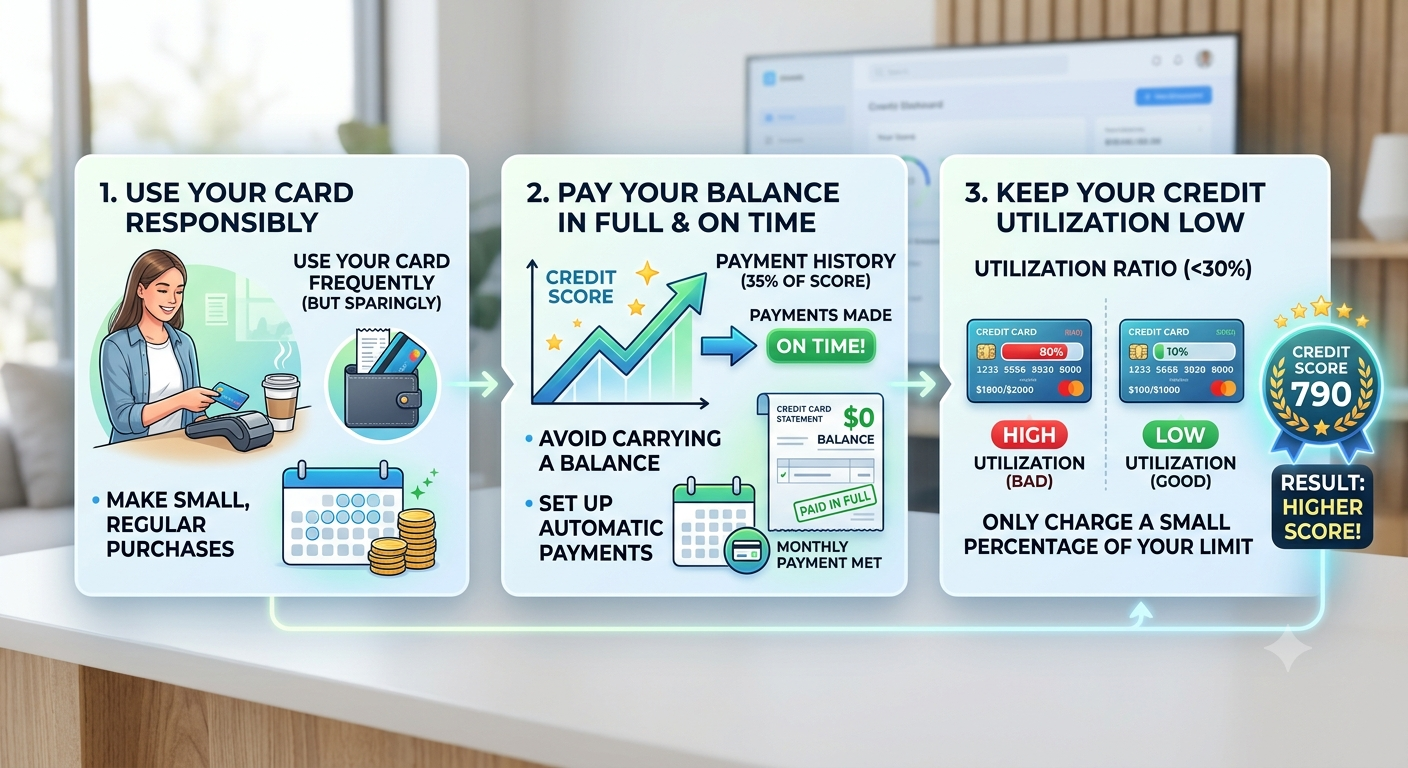
A credit card is the cheapest way to build a strong credit score, as long as you treat it as a payment tool rather than a loan. Use it every month, keep the balance small, and pay the full bill by the due date. Do that for six to twelve months and the score largely takes care of itself.
Most people get this backwards. They either avoid cards altogether and stay “credit invisible”, or they carry balances and pay interest that can reach 36% a year. This guide explains how the score is built, which habits move it, and a simple plan for your first six months with a new card.
A lot of new credit card offerings with lower limits attract with the slogan ‘increase credit score using credit card’. But does it actually work? Why just a credit card? Why not car loans? How about small bike loans? Let’s explore this and more in this article.
How your score is built
Your CIBIL score runs from 300 to 900. It is calculated from your credit report, which every lender updates at least twice a month. Since 1 January 2025, RBI has required lenders to report credit data as on the 15th and the last day of each month (RBI notification). Good habits therefore show up faster than they used to. What to do When your Loan Goes Bad?
Bureaus do not publish exact weights, but leading banks describe the usual split roughly as below. A credit card touches every one of these factors.
| Factor | Approximate weight | What it measures | How your card affects it |
|---|---|---|---|
| Payment history | 35% | Whether you pay on time, every time | Each monthly bill paid by the due date adds a positive record |
| Credit utilisation | 30% | Balance as a share of your total limit | A small balance against a large limit keeps this healthy |
| Length of credit history | 15% | Age of your oldest and average accounts | An old card, kept open, lengthens your history |
| Credit mix | 10% | Secured loans vs unsecured credit | A card is unsecured credit; a loan later adds balance |
| New credit enquiries | 10% | How often you apply for credit | Each card application creates a hard enquiry |
Payment history and utilisation together make up about two-thirds of the score, which is why the habits below focus on them.
Habits that raise your score
1. Pay the total amount due, not the minimum. Paying only the minimum keeps your record “on time”, but the rest of the balance starts collecting interest. Various credit accumulation and data analystics companies explicitly say that interest can reach 36% a year, and that a ₹10,000 balance paid off at ₹500 a month takes around three years. A missed due date is worse still: it brings a late fee and a negative mark that stays on your report.
2. Keep utilisation under 30%, and lower if you can. Utilisation is your balance divided by your limit. A well-known phenomena amongst those who have several credit cards, and keep on maximizing benefits do agree with creating a ceiling of credit utilization.
| Card limit | Spend at 30% | Spend at 10% |
|---|---|---|
| ₹50,000 | ₹15,000 | ₹5,000 |
| ₹1,00,000 | ₹30,000 | ₹10,000 |
| ₹2,00,000 | ₹60,000 | ₹20,000 |
3. Mind the statement date, not just the due date. The balance a bank reports is usually the one on your statement. If you have a large purchase in a month, pay part of it before the statement is generated so a lower balance is reported, then clear the rest by the due date.
4. Use the card a little every month. A card sitting in a drawer builds little history. Put one or two fixed bills on it, such as a mobile plan or an OTT subscription, and set up autopay for the full amount. Simple Steps to Avoid Debit and Credit Card Fraud
5. Ask for a higher limit once you have a clean record. Spending the same amount against a bigger limit lowers utilisation. After 6–12 months of on-time payments, many banks offer increases on their own; accept one only if you won’t spend more because of it.
6. Keep your oldest card open. Closing a card shrinks your total limit and, over time, shortens your credit history. If it charges an annual fee, ask the bank to move you to a lifetime-free variant instead.
7. Treat EMIs on the card with care. No-cost EMIs make large purchases easier to repay, but the full purchase amount usually blocks your limit until it is paid down. That can push utilisation up for months, so read the fees and the terms first.
8. Check your report, not just your score. Look at your CIBIL report every few months for wrong limits, accounts you don’t recognise, or late payments you didn’t make. Raise a dispute with the bureau if anything is wrong.
One card or several?
A second card can help your score, but only if you can manage both without a single slip. More cards mean a bigger combined limit and lower utilisation; they also mean more due dates to track and more enquiries on your report.
| How more cards help | How more cards hurt | |
|---|---|---|
| Utilisation | A larger total limit lowers your ratio for the same spending | Easier to overspend when more credit is available |
| Payment history | More accounts with clean records | Every card is one more due date that can be missed |
| Credit age | Old cards keep adding to your history | Each new card lowers your average account age |
| Enquiries | — | Every application is a hard enquiry; several close together look risky to lenders |
A sensible approach, drawing on guidance from credit experts and consumers who are veteren in this borrowing:
- Start with one card that suits your real spending, for example a lifetime-free cashback card.
- Wait 6–12 months before applying for a second one, and space later applications at least six months apart.
- Use only one or two cards in any month, so you always know what is due.
- Don’t apply just to check eligibility. Use the bank’s pre-approved offers or soft-check tools instead of submitting full applications.
Credit Card: Is it worth for you to use it?
Myths that cost you points
| Myth | What actually happens |
|---|---|
| “Carrying a small balance builds credit faster.” | Paying in full builds the same on-time record without the interest. A revolving balance only adds cost and raises utilisation. |
| “Checking my own score lowers it.” | Checking your own report is a soft enquiry and has no effect. Only lender enquiries from applications count. |
| “Closing cards I don’t use will help.” | It usually hurts: your total limit drops, so utilisation rises, and over time you lose an old account. |
| “Settling card dues is as good as paying.” | A “settled” status tells lenders you paid less than you owed. It is a negative remark that can take years to outweigh. |
| “A higher salary means a higher score.” | Income is not part of the score. It affects the limit you are offered, not the score itself. |
| “Using my debit card builds credit.” | Debit cards draw on your own money, so nothing is reported to the bureaus. |
| “Being a guarantor doesn’t affect me.” | If the borrower defaults, it shows on your report too. Standard Chartered advises agreeing only if you trust their ability to repay. |
A 6-month plan for a new cardholder
Standard Chartered puts the typical time to see real improvement at 4–12 months, depending on your starting point. This plan gets the basics in place in month one and then lets time do the work.
- Month 1 — set up. Note your statement date and due date. Turn on autopay for the total amount due from your salary account. Put one or two fixed bills on the card.
- Months 1–3 — keep it small. Keep monthly spend under 30% of your limit, ideally nearer 10%. Pay before the statement date in any month you go over.
- Month 3 — first check. Download your free CIBIL report. Check that the card appears with the correct limit and on-time payments.
- Months 4–6 — stay boring. Same spending, same full payments. Don’t apply for new loans or cards in this window.
- Month 6 — review. Check your score again. If it has risen and your payments are spotless, you can accept a limit increase, or consider a second card after another few months.
The whole method fits on one line: spend a little, pay it all, on time, every month.
Related Posts


Subscribe to get the best of finance and fintech. Regularly.
Categories
Popular

- 31 May 2016 | 18601 Views
- 16 June 2020 | 16009 Views

- 19 May 2021 | 15514 Views

- 14 May 2021 | 12278 Views